

BLOG

2026 Best Sensor Street Light Types for Global Buyers?

In 2026, global buyers are looking beyond brightness. They need safer roads, lower energy bills, simpler maintenance, and reliable data. A Sensor Street Light can support these goals through motion detection, adaptive dimming, daylight sensing, or networked control. Yet the best option depends on road speed, traffic patterns, climate, grid access, and maintenance skills. One product cannot fit every city.

The International Energy Agency estimates that lighting uses about 15% of global electricity consumption. Its energy-efficiency reports also identify efficient lighting as a practical path for reducing demand. However, this figure covers many lighting applications, not only streets. Buyers should avoid exaggerated savings claims. The U.S. Department of Energy has reported major lifetime and energy advantages for LED technology, but real streetlight savings depend on existing lamps, operating hours, dimming schedules, and sensor accuracy.

Look closely at the installation site. A radar sensor may detect vehicles through light rain, while a PIR sensor can respond well to pedestrians but may miss distant movement. Photocells help maintain dusk-to-dawn operation. LoRaWAN, cellular, or mesh-connected controls can provide remote fault alerts and group dimming. CIE road-lighting guidance and Zhaga smart-interface standards offer useful technical references. IP66 protection, surge protection, thermal management, and replaceable components also matter.

Small details decide performance.

This guide compares major Sensor Street Light types for global buyers in 2026. It considers energy performance, detection range, optical control, solar compatibility, cybersecurity, warranty terms, and local service capacity. Some conclusions remain imperfect. Field trials are still essential, especially where dust, humidity, wildlife, or irregular traffic can distort sensor readings.
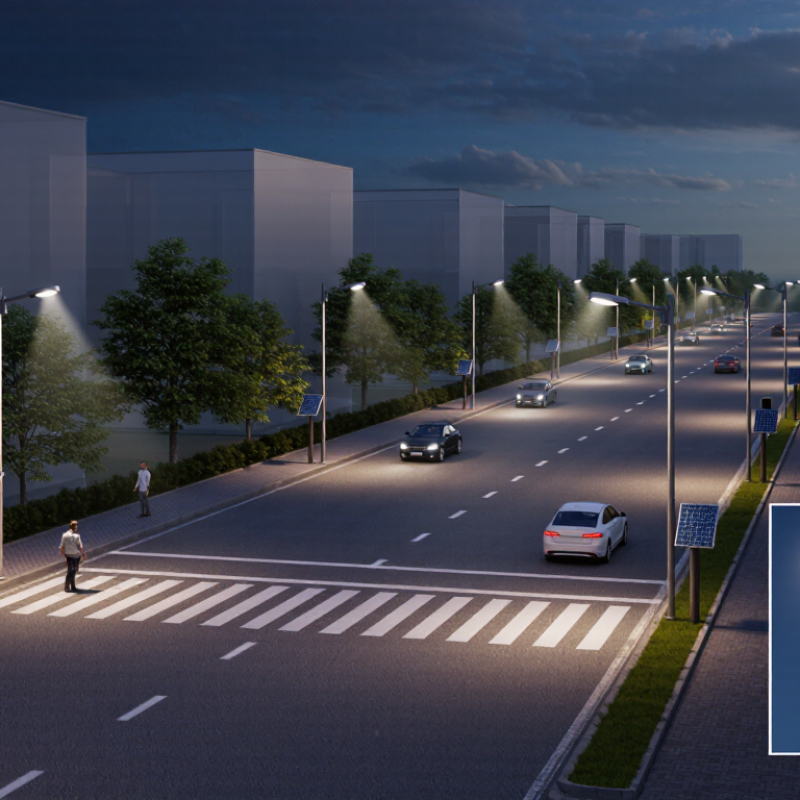
2026 Best Sensor Street Light Types for Global Buyers?

What Are Sensor Street Lights and How Do They Work?

2026 Best Sensor Street Light Types for Global Buyers?

What Are Sensor Street Lights and How Do They Work?

Sensor street lights are outdoor luminaires that adjust brightness after detecting movement, nearby vehicles, or changing daylight. A passive infrared sensor notices body heat and motion. A microwave sensor measures movement through radio waves. Photocells detect sunrise and sunset, while radar sensors can identify approaching vehicles over longer distances.

During quiet hours, the light may remain at a low output. When a pedestrian enters its detection zone, the controller raises brightness within seconds. After a programmed delay, it dims again. This reduces energy use and can extend LED service life. However, performance depends on mounting height, lens direction, weather, and traffic patterns. Rain, leaves, or small animals may trigger unwanted activation.

Tips: Match the sensor to the location. Use infrared sensing for walkways and microwave or radar sensing for roads. Check detection range, response time, dimming levels, ingress protection, and operating temperature. Confirm local electrical and lighting requirements before installation. A photocell alone may suit a simple rural road, while combined sensors offer better control in busy areas.

Global buyers should request test data, wiring diagrams, and maintenance guidance. Ask how the system behaves during sensor failure or communication loss. A design can look efficient on paper but perform poorly beside trees or reflective surfaces. Small field trials are wise. Real streets are rarely predictable.

Which Sensor Street Light Types Are Available in 2026?

2026 Best Sensor Street Light Types for Global Buyers?

Which Sensor Street Light Types Are Available in 2026?

Sensor street lights now include PIR infrared, microwave radar, ultrasonic, camera-based, and hybrid systems. PIR sensors detect body heat and work well in quiet paths. Microwave radar detects movement through light rain and can cover wider roads. Ultrasonic sensors measure reflected sound, but outdoor performance may change with wind. Camera-based systems offer richer traffic data, yet they require careful privacy and data-management planning.

Ambient-light sensors switch fixtures according to daylight levels. Networked controls add remote dimming, fault alerts, and scheduled operation. Hybrid systems combine radar with photocells, reducing false triggers near trees or parked vehicles. The International Energy Agency reports that lighting uses about 15% of global electricity. The U.S. Department of Energy also identifies controls as a major factor in reducing lighting energy use. These figures support sensor adoption, but installation quality still decides real savings. A poorly positioned sensor can waste power.

Tips: Match the sensor to the road. Use radar for busy streets and PIR for pedestrian lanes. Check detection distance at 10°C and 35°C. Ask for field-test records, not only laboratory claims. Review IEC and local electrical requirements before procurement. A 2025 market report may predict strong growth, but forecasts are not guarantees. Pilot one block first. Measure energy, false triggers, maintenance visits, and nighttime complaints. The cheapest sensor may become expensive after one winter.

How Do Different Sensor Technologies Compare?

2026 Best Sensor Street Light Types for Global Buyers?

Sensor performance changes with weather, road activity, and installation height. Passive infrared sensors detect body heat and work well on quiet paths. They may miss cyclists moving directly toward the fixture. Microwave sensors detect motion through more coverage and respond reliably in cooler conditions. However, nearby traffic can trigger unwanted lighting. Ultrasonic sensors measure reflected sound waves. They suit sheltered areas, but wind and open spaces may reduce accuracy. Camera-based systems can classify vehicles and pedestrians. They offer powerful control, yet privacy expectations and maintenance requirements demand careful review.

In practical site assessments, dual-technology sensors often deliver steadier results than one sensor alone. A PIR and microwave combination can reduce false triggers. It can also react faster when temperatures change. Dimming settings matter as much as detection range. A light rising from 20% to 100% feels safer than instant darkness followed by glare. Solar installations need low-power sensors and tested standby performance. Do not trust laboratory range figures completely. Trees, rain, dust, and mounting angles can change field results.

Tips: Test a sample unit on the actual road before ordering in volume. Record activations during daytime, rain, and late-night hours. Check whether the sensor detects slow walkers and small vehicles. Ask for ingress protection, operating temperature, warranty terms, and replacement procedures. A camera system may look advanced, but it can be excessive for a simple footpath. The cheapest sensor is rarely the lowest-cost option. Test twice. Adjust honestly.

2026 Best Sensor Street Light Types for Global Buyers

How Do Different Sensor Technologies Compare?

Microwave radar provides a long detection range and fast response, making it suitable for roads and open areas. PIR sensors are energy-efficient and cost-effective for pedestrian zones, while ultrasonic sensors perform well in compact spaces. Camera-based AI sensors can cover the longest distances and support object classification, but they generally require higher installation, processing, and maintenance costs. Values shown are typical engineering ranges and vary with installation height, weather, traffic conditions, and device configuration.

What Factors Should Global Buyers Evaluate Before Purchasing?

2026 Best Sensor Street Light Types for Global Buyers?

What Factors Should Global Buyers Evaluate Before Purchasing?

Choosing a sensor street light requires more than comparing wattage and price. Buyers should examine movement patterns, road width, mounting height, and nighttime traffic. PIR sensors detect body heat well, but they may react slowly in cold weather. Microwave sensors cover wider areas and detect movement through light rain. Dual-sensor systems can improve accuracy, although they often cost more.

Ask for measured lighting data, not attractive product claims. Check lumen output, beam distribution, color temperature, and dimming response. A narrow road needs different coverage from a public square. Review IP and impact protection ratings for local weather conditions. Coastal projects need strong corrosion resistance. Cold regions require batteries tested below freezing. Solar models also need several days of backup power.

Installation experience matters. A sensor aimed toward trees may trigger repeatedly during windy nights. A unit mounted too high may miss pedestrians. Request a sample installation or short field trial before placing a large order. Test detection distance, recovery time, false triggers, and maintenance access. Confirm electrical certifications, warranty terms, spare-part availability, and local compliance documents. A low purchase price can look attractive, yet replacement batteries may raise operating costs. Even experienced buyers can overlook this detail. Keep the evaluation honest. Field results often matter more than a perfect specification sheet.

How Should Sensor Street Lights Be Installed and Maintained?

Sensor Street Lights: Installation and Maintenance Guide

Installing sensor street lights requires more than fixing a lamp to a pole. Begin with a site survey, including road width, mounting height, traffic patterns, and nearby trees. Choose detection technology according to the location. Microwave sensors often cover wider areas, while PIR sensors may respond better to pedestrian movement. Local electrical codes and road-lighting standards must guide every connection.

Set the light level before final tightening. A small tilt can create dark patches or glare for drivers. Keep the sensor clear of branches, signs, and reflective walls. Seal cable entries carefully, especially in coastal or rainy regions. Check grounding, battery connections, and automatic dimming during commissioning. Test the fixture at night, not only in daylight.

Small errors matter.

Maintenance should include a visual inspection every three to six months. Remove dust, salt, and insect nests from the sensor window. Check pole bolts, cable glands, battery housing, and water damage. Record detection range, night output, and battery voltage in a service log. In cold climates, battery performance may fall sharply. In hot climates, poor ventilation can shorten battery life.

A practical weakness is that sensor settings are rarely perfect on the first visit. Passing vehicles, moving branches, or stray animals can trigger unwanted lighting. Adjust sensitivity and delay after observing real traffic for several nights. Replace damaged seals promptly. Waiting for a complete failure usually costs more and leaves unsafe dark periods.

2026 Best Sensor Street Light Types for Global Buyers – How Should Sensor Street Lights Be Installed and Maintained?
Sensor Street Light Type Typical Detection Method Recommended Applications Typical Performance Range Installation Requirements Maintenance Considerations Buyer Suitability
Passive Infrared (PIR) Sensor LED Street Light Detects changes in infrared radiation caused by moving people, vehicles, or animals. Residential streets, pedestrian paths, parks, driveways, and low-to-medium traffic roads. Typical detection distance: 5–12 m.
Detection angle: commonly 90°–180°.
Response time: usually less than 1 second.
Install with a clear field of view and avoid direct alignment with heat sources, exhaust outlets, or strong sunlight. Aim the sensor toward the expected movement direction. Clean the lens periodically. Check false triggering caused by vegetation, animals, heat sources, or unstable mounting. Cost-effective for areas with predictable pedestrian or vehicle movement and moderate environmental conditions.
Microwave Radar Sensor Street Light Uses electromagnetic waves to detect movement through changes in reflected signals. Urban roads, parking areas, industrial sites, windy locations, and applications requiring longer detection distances. Typical detection distance: 8–20 m, depending on the sensor and mounting height.
Can detect movement through some thin non-metallic materials.
Mount securely and keep the detection zone clear of large metal structures that may cause reflections. Configure sensitivity and hold time after installation. Inspect mounting stability, cable glands, and control settings. Recalibrate if the road layout, nearby structures, or traffic pattern changes. Suitable for larger detection zones and locations where PIR performance may be affected by temperature or wind.
Dual-Technology PIR + Microwave Sensor Light Combines infrared heat-change detection with microwave motion detection. Busy public areas, security-sensitive sites, parking facilities, campuses, and roads requiring reduced false activation. Detection distance: commonly 8–15 m.
Uses one or both detection signals, depending on the control configuration.
Position both sensing fields toward the intended coverage area. Set detection logic, sensitivity, dimming level, and time delay during commissioning. Test both sensor functions separately and together. Check firmware or controller settings where applicable. Recommended when reliability and reduced nuisance activation are more important than the lowest initial cost.
Photocell-Controlled Dusk-to-Dawn Street Light Measures ambient light level and switches the luminaire on at dusk and off at dawn. Roads, public spaces, building entrances, rural streets, and installations requiring automatic night operation. Typical switching threshold: approximately 10–50 lux, depending on configuration.
Provides light-level control but does not normally detect movement.
Install the photocell where it receives representative ambient daylight. Shield it from direct luminaire light to prevent cycling. Clean the photocell window and inspect for dirt, shading, water ingress, or nearby light sources that could affect switching. Best for simple automatic operation when continuous or scheduled night lighting is preferred.
Adaptive Dimming Sensor Street Light Uses motion sensors to change output between a low standby level and a higher activity level. Residential roads, cycleways, pedestrian routes, parks, and low-traffic public areas. Common operating profile: 20%–40% standby output and 80%–100% activity output.
Hold time is commonly adjustable from seconds to several minutes.
Define the dimming schedule, minimum light level, activation time, and recovery time. Confirm that the lighting class remains appropriate for the road use. Review energy-saving settings and verify that dimming transitions are smooth. Test sensors during both daytime and nighttime conditions. Strong choice where energy reduction and adequate lighting during periods of activity are both priorities.
Solar Sensor Street Light Combines a photovoltaic panel, battery, charge controller, LED luminaire, and motion or light sensor. Off-grid roads, rural paths, remote facilities, temporary routes, and areas with limited grid access. Typical system voltage: 12 V or 24 V DC.
Autonomy is commonly specified for approximately 2–5 nights, depending on climate, battery size, and lighting profile.
Orient the panel for the site latitude and local solar conditions. Avoid shading, provide adequate foundation strength, and protect battery equipment from excessive heat or flooding. Clean the panel, inspect battery condition and terminals, check charge performance, and verify that the autonomy meets seasonal requirements. Useful for remote locations, but requires careful solar-resource analysis and battery-life planning.
Connected Smart Sensor Street Light Uses sensors with a wired or wireless controller for monitoring, scheduling, fault reporting, and remote dimming. Smart-city projects, arterial roads, campuses, airports, industrial parks, and large municipal networks. Supports programmable schedules, remote status monitoring, dimming profiles, and energy-use reporting.
Communication range depends on the selected network architecture and site conditions.
Complete a communications survey, assign device identifiers, protect network credentials, and verify interoperability with the lighting management platform. Monitor communication status, update software through approved procedures, review alarms, and retain configuration backups. Appropriate for large-scale buyers seeking centralized control, measurable energy data, and predictive maintenance.
Vehicle-Activated Radar Street Light Detects approaching or passing vehicles using radar-based motion sensing. Rural roads, access roads, parking entrances, low-traffic streets, and isolated roadway sections. Typical detection distance: approximately 15–30 m, depending on mounting height, road geometry, and sensor design.
Can be configured for directional or zone-based activation.
Aim the detection zone along the lane rather than across unrelated movement areas. Validate trigger distance with real vehicles before finalizing settings. Check alignment, sensitivity, detection direction, and road-side obstructions. Inspect for interference from nearby radar equipment where relevant. Effective for reducing operating hours on roads with intermittent vehicle traffic.
General installation and maintenance guidance: Before installation, confirm the required roadway lighting level, pole height, spacing, wind load, electrical protection, grounding, ingress protection, and local regulations. Typical outdoor luminaires are specified with IP65 or higher protection, but the required rating should match the site exposure. After installation, verify light distribution, sensor coverage, dimming behavior, switching thresholds, cable sealing, and structural stability. A practical maintenance program normally includes visual inspection every 6–12 months, cleaning when dirt affects output or sensing, electrical and mechanical checks at least annually, and battery testing for solar systems according to the battery technology and climate.
Performance figures are typical planning ranges rather than universal guarantees. Actual results vary with sensor model, mounting height, ambient temperature, weather, road geometry, traffic behavior, luminaire optics, battery capacity, and local installation conditions.
Go to Top
