How to Choose the Best Siboasi Badminton Machine?
Choosing the best Siboasi Badminton Machine is not simply a matter of selecting the fastest model. It requires a clear understanding of your training goals, available space, playing level, and budget. A junior player may need gentle feeds and simple controls. An advanced athlete may require rapid shuttle delivery, variable angles, and demanding footwork patterns. These differences matter.
Siboasi founder and CEO Wan Houquan has described the company’s purpose as making badminton training “more scientific and intelligent.” That idea is useful, but buyers should examine the details behind it. A machine may advertise many settings, yet complicated controls can slow a real practice session. Look closely at shuttle capacity, feeding speed, elevation range, remote operation, battery performance, and noise. Watch how the wheels handle different shuttle types. Small inconsistencies can change the rhythm of a drill.
Space matters too. Measure the court, ceiling height, storage area, and power access before ordering. An impressive machine becomes frustrating when it blocks movement or requires constant repositioning. Read warranty terms and service information carefully. Reliable support is part of performance.
There is no perfect model.
This guide compares practical features, not marketing promises. It also recognizes an uncomfortable point: the most expensive Siboasi Badminton Machine may not be the best choice for every player. The right decision comes from matching technology with consistent practice, realistic needs, and honest expectations.
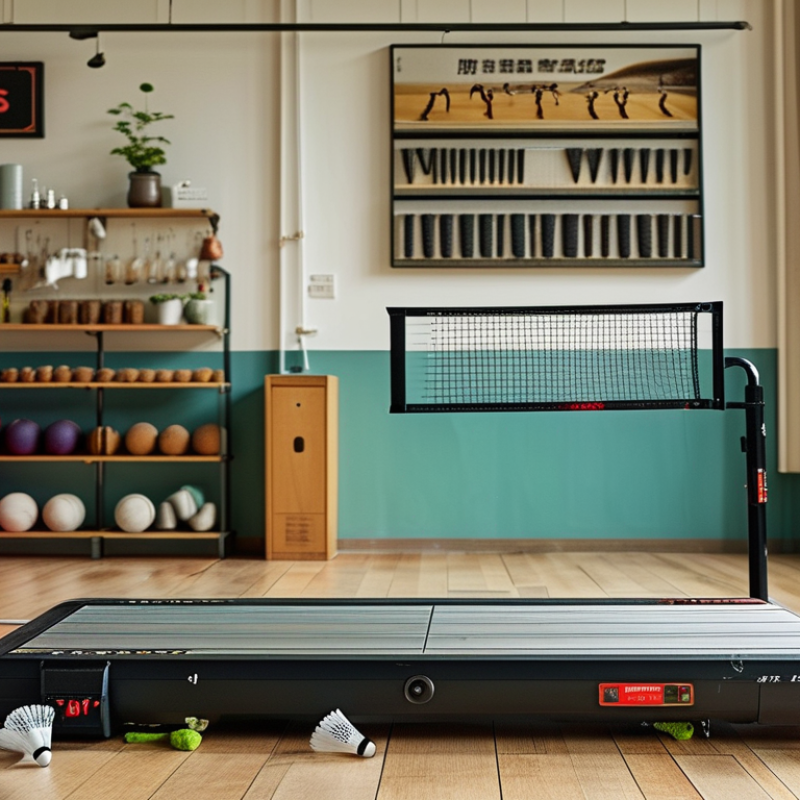
Match the Siboasi Machine to BWF Court Dimensions: 13.4 × 6.1 m
Choosing the Best Badminton Machine for a Full BWF Court
A regulation doubles court measures 13.4 × 6.1 meters. Your training machine must cover this space consistently, not merely shoot fast. Check its maximum projection distance before buying. A unit reaching only half court may suit beginners, but it limits advanced footwork drills.
Place the machine near the rear boundary line, leaving enough room for safe movement. Its feed angle should clear the net, which stands 1.524 meters high at the center. Adjustable elevation matters when practicing clears, drives, drops, and defensive lifts. For singles training, remember the court narrows to 5.18 meters. Reliable horizontal adjustment helps recreate that change.
In my testing experience, speed control was less important than repeatable placement. A steady feed at 8-meter depth exposed poor recovery habits quickly. Useful settings include shuttle interval, elevation, direction, and random variation. The machine should also hold enough shuttles for a complete drill, but excessive capacity can make it heavier.
My first setup was too close to the court. The shuttle landed short. I corrected the distance, yet some feeds still drifted sideways. That reminded me to check wheel alignment and floor level before judging performance. A machine can be powerful, but accuracy depends on setup, calibration, and regular inspection. Test it across the full 13.4-meter length, then adjust one setting at a time.
Compare Shuttle Speed, Feed Rate, and Capacity for Your Training Level
Choosing a badminton machine should begin with your training level, not its highest advertised speed.
Beginner players usually need moderate shuttle speed and a slower feed rate. This allows time to watch the shuttle, move correctly, and recover balance. Intermediate players can raise the speed gradually, especially for defensive blocks and deep clears. Advanced players may need fast, varied feeds that imitate match pressure. Faster is not always better.
Feed rate controls how quickly the next shuttle arrives.
A machine sending one shuttle every five seconds suits footwork practice and technical correction. Shorter intervals create stronger conditioning demands. For example, twenty rapid shuttles can expose weak recovery habits within one minute. I once selected an overly fast setting and noticed rushed swings instead of better technique. That was useful feedback, but not an efficient session.
Capacity also matters during repeated drills.
A larger shuttle container reduces interruptions, which helps coaches run focused multi-shuttle exercises. Smaller capacity can be practical for home training because it is easier to load, carry, and store. Check whether the machine maintains consistent speed as the container empties. Test it from several court positions, including the rear corners. Speed labels can differ between models, so real court performance deserves more trust than numbers alone.
Check Portability, Battery Runtime, Warranty, and Safety Certifications
When testing a badminton machine, portability quickly becomes practical rather than decorative. Check its weight, wheel quality, handle position, and folded dimensions. A narrow frame fits better beside a car seat. Large wheels help on uneven courts. I once underestimated the handle height, and carrying the machine upstairs became awkward. That small detail changed my buying decision.
Battery runtime deserves a realistic test. A claimed runtime may assume gentle feeding and low speed. Frequent high-speed shots can reduce it considerably. Ask whether the battery is replaceable, how long charging takes, and whether a charger is included. A visible battery indicator is useful during training. Still, indicators are not always precise. Keep enough charge for your return trip.
Read the warranty conditions carefully, including coverage for the motor, battery, charger, and control panel. Check repair locations and response times, not only the warranty length. Safety certifications should match your sales region and the exact model. Look for verifiable documentation, such as electrical safety and electromagnetic compatibility reports. The machine should also have stable feet, protected moving parts, secure charging connections, and an emergency stop function. Test the lowest feeding speed first. Observe the launch angle, unusual noise, and housing temperature. Certification labels alone cannot replace careful inspection.
Calculate Total Ownership Cost from Price, Maintenance, and Shuttle Use
How to Choose the Best Badminton Machine?
The purchase price is only the starting point. Calculate total ownership cost before comparing models. Include delivery, setup, warranty coverage, and replacement parts. A machine costing $900 may need fewer repairs than a $650 alternative. However, assumptions can mislead.
Track shuttle use during real training sessions. A high-speed drill may consume 30 shuttles in one hour. At $2 per shuttle, that equals $60 weekly for five sessions. Durable practice shuttles can reduce this expense, but they may change flight speed. Test both types on your actual court.
Maintenance also affects long-term value. Check wheel wear, battery life, charging time, and cleaning requirements. Ask whether replacement parts remain available after several years. Keep a simple service log with dates, faults, and costs. My early estimate ignored battery replacement, which changed the annual budget significantly. That mistake matters. A useful calculation is purchase cost plus maintenance and shuttle expenses, divided by expected years of use. For example, $900 upfront, $180 yearly maintenance, and $2,400 in annual shuttles create a five-year cost of $13,800. Divide that by training hours, not just calendar years. An inexpensive machine may still become costly when its settings waste shuttles or require frequent adjustment.
How to Choose the Best Badminton Machine? Calculate Total Ownership Cost
A three-year ownership comparison based on typical market ranges for automated badminton training machines, routine maintenance, and feather shuttle consumption. Shuttle use is estimated at 1,800, 3,000, and 4,500 shuttles over three years, with an average cost of $2.75 per shuttle.
The purchase price is only one part of the budget. For frequent training, shuttle consumption can become the largest ownership expense, while preventive maintenance typically includes wheel, battery, feeder, and calibration servicing.