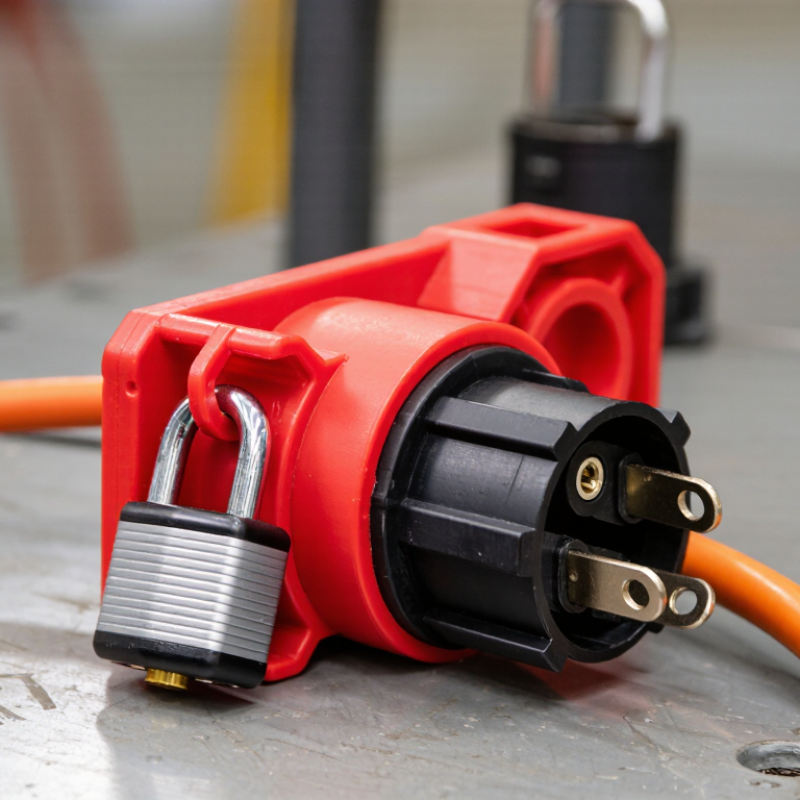
| Primary Components | Main Components of a Plug Lockout Device An electrical plug lockout is a temporary enclosure that prevents a plug from entering a power socket. It helps control hazardous energy during maintenance, cleaning, or equipment adjustment. The device does not remove electricity by itself. A trained worker must disconnect the plug and verify that the equipment is de-energized.
The main component is the rigid lockout body. It surrounds the plug and limits access to its blades or connection point. Many designs use a hinged or sliding cover, allowing the plug to fit inside without damaging the cable. Locking holes accept one or more padlocks, so each authorized worker can maintain personal control. A cable opening must be narrow enough to prevent plug removal, yet smooth enough to avoid cutting insulation.
Some models include warning labels or spaces for identification. These details matter when several machines are being serviced in the same room. Durable polymer or reinforced material can resist impact, oil, and ordinary workshop wear. Still, material strength is not everything. A poorly sized device may leave gaps or place pressure on the cord. That mistake is easy to overlook.
To use the lockout, the worker disconnects the plug, places it inside the enclosure, and secures the cover with a lock. The equipment should then be tested using an approved procedure. Fit must be checked every time. Plugs differ in shape, cable thickness, and connector design, so one device cannot safely fit every application. What Is an Electrical Plug Lockout and How Does It Work? A plug lockout is a protective enclosure that prevents an electrical plug from being inserted into a power source during maintenance. Its main components work together to isolate the plug, secure the enclosure with a padlock, and communicate the hazard. The chart shows the typical presence of one representative feature in a standard plug lockout design. Actual construction varies by plug size, enclosure type, and safety requirements. A lockout should be applied only after the circuit has been de-energized and verified. How to Install and Apply an Electrical Plug Lockout What Is an Electrical Plug Lockout and How Does It Work?
Installing an electrical plug lockout begins with identifying the correct plug and matching device size. Turn off the equipment using its normal control, then disconnect the plug from the socket. Never rely on the switch alone. Inspect the plug, cord, and lockout body for cracks, exposed wires, or poor fit. A damaged component needs attention before isolation continues.
Place the disconnected plug inside the lockout enclosure. Guide the cord through the opening without forcing it or bending it sharply. Close the cover and attach a personal lock and warning tag. The plug should remain fully trapped and impossible to reconnect. A qualified person should verify zero energy with an approved tester, following site procedures. Test the equipment controls afterward, then return them to the off position. In practice, people sometimes skip this second check because the plug looks safely contained. That shortcut deserves correction.
Tips: Choose a lockout that fits the plug dimensions and cord diameter. Keep the key under the control of the person performing the work. Mark the isolated equipment clearly, especially in crowded maintenance areas. Do not use a plug lockout as a substitute for checking stored or secondary energy. Review the installation with affected workers. Small details matter. Recheck the fit after vibration, movement, or outdoor exposure, since a loose cover can weaken the protection. Safety Checks and Removal Procedures What Is an Electrical Plug Lockout and How Does It Work? Safety Checks and Removal Procedures An electrical plug lockout covers a disconnected plug and prevents reconnection. It normally accepts a safety lock and warning label. Before installation, identify the correct equipment and every energy source. Check whether another circuit, battery, or backup supply can energize the equipment. Switch off the equipment using its normal control. Then disconnect the plug fully from the outlet. Do not rely on a wall switch alone. Test the equipment with a properly rated voltage tester. Confirm the tester works before and after testing. This small detail is easy to overlook. A dark display does not prove zero energy. Inspect the plug, cord, lockout device, and outlet for cracks, heat damage, or moisture. If anything looks questionable, stop and report it to a qualified person. Attach the lock and label firmly, then keep the key under controlled access. The lockout should fit securely without stressing the plug or cord. Removal requires equal care. The person who applied the lock should remove it whenever possible. Check the work area for tools, loose parts, and exposed conductors. Confirm that guards are replaced and everyone is clear of moving equipment. Remove the device and reconnect power only after authorization. Watch for unexpected startup. A rushed removal can undo a careful isolation. Procedures may need adjustment after a near miss, especially when equipment has multiple power sources or unclear labeling. FAQS It is a physical enclosure for a disconnected plug. The enclosure prevents reconnection to a power outlet. It usually accepts a lock and warning label. It is only a barrier, not proof of complete safety. Disconnect the plug completely from the outlet. Place the plug inside the lockout enclosure. Secure the enclosure with an approved lock. The trapped plug cannot be reconnected without removal. No. A wall switch may not isolate every energy source. Unplug the equipment before applying the lockout. Also check batteries, backup supplies, and separate circuits. Use a properly rated voltage tester. Test the tester before checking the equipment. Test the equipment, then check the tester again. A dark display alone proves very little. Check the plug, cord, outlet, and lockout device. Look for cracks, heat damage, moisture, or loose parts. Confirm that the enclosure fits without stressing the cord. Stop when something looks questionable. A qualified worker should control the isolation process. That person identifies the equipment and every energy source. The key should remain under controlled access. Small assumptions can create serious gaps. Not by itself. It supports a broader energy-control procedure. Workers should isolate, lock, test, and verify before servicing. Unexpected stored energy may still remain. The person who applied the lock should remove it when possible. Check for tools, loose parts, exposed conductors, and missing guards. Confirm that everyone is clear before restoring power. Expect possible startup. Pause and review the procedure. Check for unclear labels or hidden power sources. A repeated method is not always a reliable method. Improve the process before work continues. Conclusion An Electrical Plug Lockout is a safety device designed to prevent an electrical plug from being connected to a power source during maintenance, repair, or inspection. It encloses or secures the plug so that it cannot be inserted into an outlet, helping control hazardous energy and preventing unexpected equipment startup. The device commonly includes a durable lockout enclosure, a locking mechanism, and space for an authorized padlock or identification tag.
To apply an Electrical Plug Lockout, first shut down the equipment, disconnect the plug, and verify that no electrical energy remains. Place the plug inside the lockout device, secure the enclosure, and attach the assigned lock and warning tag. Before work begins, inspect the device for damage and confirm that the plug cannot be accessed or reconnected. After the task is complete, check that all tools and personnel are clear, remove the lock and tag according to the established procedure, and restore power carefully. Proper installation, inspection, communication, and removal are essential for maintaining a safe work environment. |