
Finding reliable custom plastic manufacturers in 2026 requires more than comparing online prices. A polished website can hide weak quality systems, delayed tooling, or unclear material sources. Buyers should examine production experience, engineering support, inspection methods, and communication habits before signing a contract.
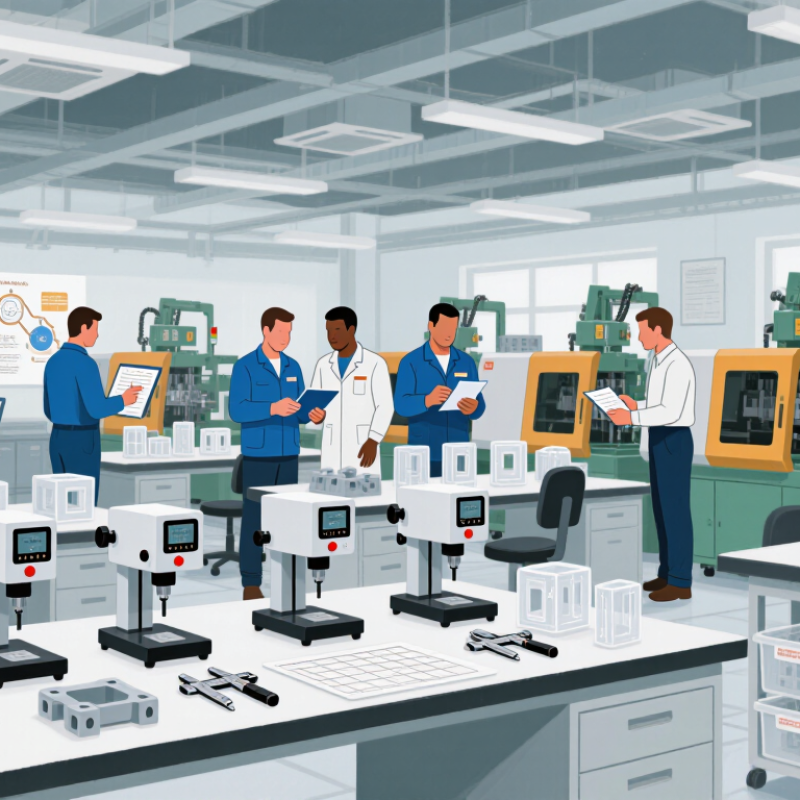
The search should begin with specific project requirements. Define the resin, dimensions, tolerance, surface finish, expected volume, and service environment. Then ask each supplier for relevant samples, process records, and references from comparable industries. A factory visit, whether physical or virtual, can reveal important details. Look for organized workstations, labeled materials, calibrated measuring tools, and documented inspection points. Small details matter.
Reliable manufacturers should explain mold design, prototype testing, production controls, and corrective actions clearly. They should also discuss responsible waste handling and applicable product standards. Certificates deserve verification, not automatic trust. Independent testing may be worthwhile when safety or long-term performance matters.
Experience has taught many buyers that the cheapest quotation rarely shows the full cost. Mold revisions, rejected batches, and shipping delays can quickly change the calculation. Still, supplier evaluation is not perfectly predictable. Even a careful audit may miss a future communication problem. That uncomfortable possibility deserves attention. Build a written quality agreement, approve a production sample, and set measurable acceptance criteria. Strong custom plastic partners welcome these safeguards. They do not promise perfection. They provide evidence, respond honestly, and improve when something goes wrong.
Before searching for a custom plastic manufacturer, define the part’s real job. Write down its dimensions, expected load, operating temperature, and contact with moisture or chemicals. Specify the plastic family, color, surface finish, and required transparency. A drawing alone is rarely enough.
Include measurable tolerances, not vague phrases like “high quality.” State annual volume, first-batch quantity, target cost, packaging needs, and delivery deadline. If the part needs threads, clips, seals, or moving surfaces, describe how it will be assembled and tested. Add relevant safety, environmental, and industry requirements early. This prevents unsuitable material suggestions and expensive tooling changes.
I once treated a prototype drawing as production-ready. It was not. A small wall-thickness change later affected cooling and appearance. That experience made design reviews essential. Share 3D files, technical drawings, sample photos, and inspection criteria with potential manufacturers. Ask how they verify dimensions, control color, and manage process variation. Request sample parts before approving full production. A practical specification should also identify acceptable defects, inspection tools, and approval procedures. Leave room for uncertainty. Some requirements may change after testing, especially when the plastic meets heat, pressure, or repeated movement. Clear assumptions help manufacturers quote honestly and reveal where engineering advice is needed.
Finding reliable custom plastic manufacturers in 2026 starts with a disciplined shortlist, not a polished website. PlasticsEurope’s Plastics—The Fast Facts 2024 reports 413.8 million tonnes of plastics were produced globally in 2023. That scale creates choice, but also noise. Search suppliers through industry directories, trade associations, and verified certification databases. Record their molding methods, material expertise, production capacity, export experience, and typical order volumes.
Ask each candidate for recent technical evidence. Request sample inspection reports, process capability data, mold maintenance records, and references for comparable parts. ISO’s Survey of Certifications reports more than one million ISO 9001 certificates worldwide, so certification alone proves little. Check the certificate scope and issuing body. A factory may hold certification for assembly, not injection molding. That distinction matters.
Use a simple scoring sheet. Weight dimensional accuracy, material traceability, tooling ownership, communication speed, and delivery history. Ask for a small pilot run before approving larger production. Measure warpage, flash, color consistency, and fit with actual gauges. Do not rely only on a successful sample. One useful test is repeating the same order after several weeks. Can the supplier reproduce the result?
Look closely at weak signals. Vague answers often hide weak controls. A clean facility can still miss deadlines. I would also challenge my own shortlist: familiar processes may receive too much trust, while smaller specialists may deserve a fair technical review. Reliability is demonstrated through records, repeatability, and transparent problem handling.
| Evaluation Area | Information to Request | How to Verify It | Reliable Evidence | Potential Warning Sign |
|---|---|---|---|---|
| Process and product fit | Processes offered, such as injection molding, extrusion, blow molding, or thermoforming; machine and part-size capabilities; relevant part examples. | Compare the supplier’s documented capabilities with the part design, material, dimensions, expected volume, and finish requirements. | Specific examples of comparable parts and a clear explanation of the proposed process, tooling, and production sequence. | Claims of handling any process or part size without equipment details or relevant examples. |
| Quality management | Current quality-system certificates, inspection procedures, defect handling, corrective-action process, and production-record practices. | Check certificate scope, site, validity dates, and issuing certification body. Confirm that the certified scope covers the work being quoted. | A valid, relevant ISO 9001 certificate and documented inspection and corrective-action procedures. ISO 13485 or IATF 16949 may be relevant to medical-device or automotive supply chains, respectively. | An expired certificate, a certificate for a different site or activity, or treating certification as proof that every part will meet requirements. |
| Material control | Exact resin family and grade, supplier or grade traceability, colorants or additives, and any required material or regulatory documentation. | Review the resin manufacturer’s technical data sheet and confirm that the specified grade matches the application and drawing requirements. | Grade-specific documentation and traceable material records linked to production lots. Where flammability performance is required, verify the exact material and thickness against the applicable UL 94 listing or other specified test requirement. | Substituting a “similar” resin without written approval or providing generic data that does not identify the grade. |
| Dimensional and functional capability | Inspection plan, measurement equipment, sample inspection results, and proposed control points for critical dimensions and functions. | Provide a controlled drawing with tolerances and acceptance criteria; ask the supplier to identify how each critical characteristic will be measured. | Measurement results tied to drawing revision and sample identification, with suitable calibrated equipment and a documented response to out-of-specification results. | Unqualified promises of tight tolerances without reviewing the part geometry, resin, tooling, and measurement method. |
| Tooling and design-for-manufacture review | Tool concept, expected tool life assumptions, maintenance plan, sampling stages, and written terms covering tooling ownership and access. | Review the mold design and sample-approval plan before production; record tool ownership, storage, maintenance, and transfer terms in the contract. | A documented design review, agreed approval samples, and clear contractual rights for tooling and tool records. | Unclear ownership, unspecified extra charges, or no defined route for obtaining the tool or production records if the relationship ends. |
| Production capacity and lead time | Quoted sample and production schedule, available equipment, planned production location, capacity assumptions, and contingency arrangements. | Ask which steps determine the schedule, what assumptions the quote uses, and how capacity is reserved for repeat orders. | A written schedule with defined milestones, dependencies, and a process for communicating delays. | A guaranteed delivery date without stated assumptions, capacity evidence, or a schedule for tooling and sample approval. |
| Cost and quote completeness | Separate pricing for tooling, samples, unit production, packaging, testing, freight, and any minimum-order quantities or setup charges. | Compare quotations using the same drawing revision, material grade, order quantity, inspection requirements, packaging, and delivery terms. | A line-item quote that identifies exclusions, payment terms, quote validity, and the assumptions behind the price. | A low unit price that omits tooling, inspection, packaging, freight, or other required costs. |
| Compliance and product testing | Applicable customer, market, and product requirements; test methods; reports; declarations; and any required substance or safety documentation. | Define requirements for the specific product and destination market. Confirm that test reports identify the tested material or product and the method used. | Current, relevant test documentation from a competent laboratory where required, with results traceable to the material or product supplied. | Using a generic certificate as proof of compliance for a different material, product configuration, or market. |
| Communication and traceability | Named project contacts, drawing-revision control, approval records, lot identification, and procedures for reporting production changes or defects. | Use a technical question set and sample approval process; check whether changes are documented and approved before implementation. | Prompt, specific answers; controlled document revisions; and production records that connect material lots, inspection results, and finished goods. | Unrecorded design or material changes, inconsistent document versions, or unclear responsibility for corrective actions. |
| Shortlist decision | Completed evidence for technical fit, quality, material control, tooling terms, capacity, total cost, and communication. | Compare candidates against the same requirements. Resolve missing evidence before placing a production order; use samples or a pilot run when appropriate. | A shortlist supported by verifiable documents, a technically reviewed quote, agreed samples, and written commercial and tooling terms. | Selecting a supplier on price or website claims alone, without validating the requirements that matter to the part. |
Note: Certifications and test requirements should be selected according to the product, industry, and destination market. Confirm current certificate status and scope directly with the issuing body, and define acceptance criteria in the purchase documents.
When evaluating custom plastic manufacturers in 2026, verify their real production capabilities. Ask for recent examples using similar resins, mold designs, and tolerance requirements. Request process sheets, inspection reports, and sample parts from comparable projects. Inspect their molding machines, drying equipment, measurement tools, and mold maintenance records. A capable supplier should explain how it controls warpage, shrinkage, flash, and color variation. Do not rely on polished samples alone.
Quality systems reveal how consistently a factory works. Look for documented incoming inspection, in-process checks, final approval, and nonconformance handling. Review calibration records for gauges, CMM equipment, and temperature controls. Ask how the team traces resin lots from delivery to finished parts. For regulated applications, confirm whether the facility holds relevant certifications, such as ISO 9001 or ISO 13485. Automotive projects may require IATF 16949 or structured approval processes. A certificate proves little without verification. Check its issuer, scope, expiration date, and covered production site.
Industry experience should be supported by evidence, not confident promises. Ask for anonymized case details, pilot-run data, and corrective-action records. A technical discussion often exposes knowledge gaps quickly. Use a small trial order to evaluate communication, dimensional stability, packaging, and delivery discipline. Record every result. A perfect sample can mislead. One weakness in supplier evaluation is overvaluing certification while overlooking poor daily execution. Real reliability appears through repeatable parts, honest reporting, and fast responses when results fall short.
Verify capabilities, quality systems, and industry certifications. Use certification audit milestones as one document check when evaluating a supplier’s quality management system.
For an ISO/IEC 17021-1 certification cycle, the first surveillance audit is due within 12 months of the certification decision, and recertification takes place at intervals not exceeding three years. These are audit-cycle milestones—not proof of a manufacturer’s molding, tooling, or material expertise. Confirm the certificate’s validity, covered site and scope, then separately review process-specific capability and quality records.
Source: ISO/IEC 17021-1:2015. Certification arrangements may vary; verify requirements with the certification body.
Price is easy to compare, but the quote must describe the same job. Check whether mold costs, resin grade, finishing, inspection, packaging, and shipping are included. Ask for pricing at your expected order volume, not just a large production run. Lead times should be broken into tooling, sample approval, production, and delivery. A short estimate may leave out sample revisions or material delays. Small details matter.
Communication is part of the comparison. Send each manufacturer the same drawing and ask how they will verify critical dimensions. Clear answers should identify tolerances, measurement methods, and who approves samples. A practical, if imperfect, test is to note how quickly a supplier flags missing specifications rather than simply promising a fast quote. I’d still double-check this; responsiveness during quoting does not guarantee smooth production. Put key expectations in the contract, including acceptance criteria, change approvals, payment milestones, defect handling, and responsibility for tooling. Read the delivery terms closely, too. Unclear terms can turn a small delay into a costly disagreement.
A reliable custom plastic manufacturer must prove performance before promising scale. Start with the prototype, but do not treat appearance as evidence. Check wall thickness, sink marks, warpage, flash, and assembly force under measured conditions. Request resin certificates, lot numbers, drying records, and dimensional reports. PlasticsEurope reported global plastic production of 400.3 million tonnes in 2022, making material traceability more important than a polished sample.
Production samples reveal the truth. Approve parts from the intended mold, machine, resin, and process settings. Measure critical dimensions across multiple cavities and batches. Test heat, chemical exposure, impact, fatigue, and aging where the product will operate. ISO 9001 certificates exceeded 1.2 million worldwide in the ISO Survey 2022, yet certification alone does not guarantee capable molding. Audits should include calibration records, corrective actions, operator training, and process-control charts. Ask to see failed samples too. That request often exposes how honestly a supplier manages variation.
Long-term reliability needs evidence beyond one successful shipment. Review defect rates, on-time delivery, mold-maintenance history, and customer complaint closure over at least twelve months. Require a control plan, approved change procedure, and retained samples. A small pilot run is wiser than a large first order. I would still leave room for doubt. Polymer behavior can shift with humidity, recycled content, or a new pigment batch. Recheck critical parts after storage, transport, and repeated use. The strongest supplier welcomes these uncomfortable tests.
All products and services provided by Innovative Plastic Molders, Inc. will meet or exceed our customer's perceived requirements and expectations. We will listen and respond to what our customers are telling us in a timely and forthright manner.

ISO 9001:2015 CERTIFIED
© Copyright 2009 – Innovative Plastic Molders, Inc.
Website by Central 8 Marketing
10451 Dog Leg Road Ste 200
Vandalia, OH 45377
Phone: 937.898.3775
Fax: 937.535.0640
Email: sale@endtheplastic.com