

Choosing among China’s top Spunlace Machine manufacturers requires more than comparing prices and catalog photographs. A reliable decision begins with your actual production plan: fiber type, web width, fabric weight, line speed, water pressure, energy use, and target markets. Cotton, viscose, polyester, and blended fibers can behave differently during hydroentanglement. A machine that performs well with viscose may require adjustments for recycled polyester.
Professor Thomas Gries, a respected textile technology expert, once stated, “The best machine is not always the fastest; it is the machine that fits the process.” This principle deserves attention when evaluating Chinese suppliers. A high-speed Spunlace Machine may look impressive, yet unstable web formation, excessive water consumption, or difficult maintenance can reduce its real value. Small details matter. Inspect nozzle design, filtration systems, pump brands, control interfaces, and access to replacement parts.
Factory experience also matters. Ask manufacturers for installation records, production samples, energy data, and customer references from similar applications. Request a live trial using your intended fibers. Watch the operator change settings. Notice whether technical staff explain problems clearly or avoid difficult questions.
Certification documents are useful, but they are not enough. Independent verification remains important. Some supplier claims may be incomplete, outdated, or overly optimistic. That is where buyers must remain careful.
A practical comparison should include total ownership cost, training, commissioning, warranty response, and long-term process stability. The cheapest quotation can become expensive after repeated stoppages. The most advanced option can also be unnecessary. Your best choice should balance performance, support, adaptability, and evidence. Expect a few unanswered questions. Good purchasing decisions often begin by identifying them.
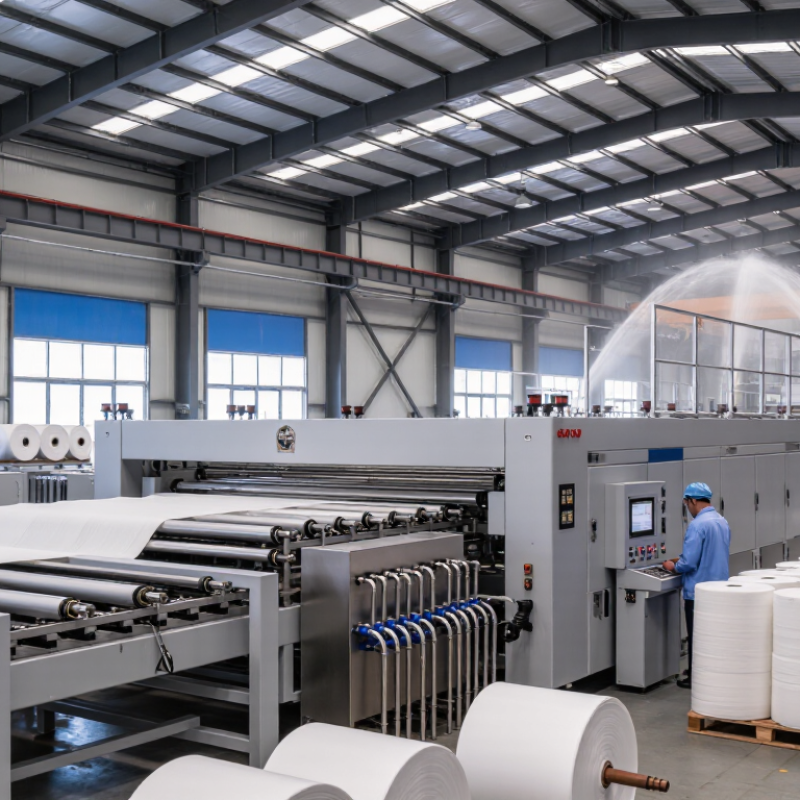
A spunlace machine makes nonwoven fabric by entangling fibers with high-pressure water jets. Unlike woven equipment, it does not use yarn crossing patterns. It starts with prepared fibers, commonly viscose, polyester, cotton, or blended materials. A carding unit spreads these fibers into a thin, even web. The web then moves onto a perforated conveyor for water treatment.
Fine jets strike the web from above and below. Their force pushes fibers through the layers, creating mechanical entanglement. Vacuum boxes remove excess water beneath the conveyor. Several jet zones may be used, with pressure adjusted for softness, strength, and surface texture.
The wet sheet then passes through dewatering rollers, drying chambers, and a winding unit. Small changes matter. Water pressure, line speed, and fiber length can change the final hand feel.
When evaluating a spunlace machine manufacturer, inspect the complete process rather than focusing on speed alone. Ask for test data covering fabric weight, tensile strength, moisture content, and energy use. A factory visit can reveal nozzle alignment, filter maintenance, and access around the dryer. These details affect downtime. Experienced engineers should explain cleaning intervals and control settings clearly. However, no machine setting works perfectly for every fiber blend. Trial production remains necessary, and early results may need careful adjustment. A reliable supplier should provide process support, spare-part planning, operator training, and realistic performance figures. Fancy numbers can mislead. Practical evidence is stronger.
When comparing China’s top spunlace machine manufacturers, technical details deserve more attention than catalog photos. Start with the usable web width, production speed, and supported fabric weight range. A machine rated at high speed may perform differently with heavy or delicate nonwoven materials. Ask for test records using your target fiber blend, not only standard samples. Real results matter.
Check the fiber-opening system, water-jet pressure control, and filtration design. Stable pressure helps prevent uneven bonding and visible streaks. Energy consumption should be measured at your expected output, including pumps, dryers, and water treatment equipment. Inspect the control system carefully. Touchscreen monitoring, alarm history, remote diagnostics, and recipe storage can reduce downtime. Simple operation is valuable.
Also examine frame rigidity, nozzle maintenance access, and replacement-part availability. During factory visits, observe noise, water leakage, cable protection, and cleanliness around the line. These small details reveal manufacturing discipline. Request installation records, acceptance criteria, and references from facilities with similar capacity. A supplier that explains limitations clearly may be more reliable than one promising extreme output. I would not trust a perfect demonstration alone. Ask how performance changes after months of continuous operation. The comparison is still incomplete without service response times, operator training, and documented quality checks.
Choosing a spunlace machine manufacturer requires more than comparing quoted speeds. Smithers’ 2024 market report forecasts continued growth in spunlace demand through 2028, driven by wipes, hygiene products, and technical textiles. This growth makes supplier experience important. Ask for at least three recent installations with similar fiber blends, web widths, and production targets. Visit one operating line if possible. Factory photographs are not enough.
Quality should be measured during a witnessed acceptance test. Check web uniformity, basis-weight variation, water pressure stability, energy use, noise, and stoppage recovery. Request production records from a full shift, not a short demonstration. INDA and EDANA’s Global Nonwovens Industry Outlook 2024–2029 highlights efficiency and sustainability as major industry priorities. Therefore, compare kilograms per hour with water and electricity consumption. Small details matter. Ask how quickly operators can replace filters, clean injectors, and change forming fabrics. A polished proposal may still hide difficult maintenance.
Certifications support reliability, but they do not prove fabric quality. ISO 9001 confirms a documented quality-management system, while ISO 14001 addresses environmental management. The 2023 ISO Survey recorded more than one million ISO 9001 certificates worldwide, so certification alone is not a strong differentiator. Verify the certificate scope, issuing body, and validity. Also request electrical safety documents, component traceability, inspection reports, and software backup procedures. I would not accept every claimed figure without independent testing. That caution can slow purchasing, but it may prevent years of unstable output.
| Assessment Dimension | What to Evaluate | Evidence to Request | Recommended Weight | Practical Acceptance Indicator |
|---|---|---|---|---|
| Relevant Industry Experience | Experience with complete spunlace or hydroentanglement production lines, including web forming, water-jet entanglement, dewatering, drying, winding, and utilities. | Project list, commissioning records, references for similar fiber types and product widths, and production-line photographs. | 20% | The manufacturer can demonstrate completed projects with comparable output, raw materials, working width, and end-use requirements. |
| Process Engineering Capability | Ability to control key hydroentanglement variables such as water pressure, nozzle configuration, line speed, web uniformity, dewatering, and drying. | Process-flow diagram, equipment specifications, trial reports, control philosophy, and sample testing data. | 15% | The proposal explains how machine settings are adjusted for different fibers, basis weights, strength targets, and absorbency requirements. |
| Product Quality and Uniformity | Stability of basis weight, tensile strength, elongation, thickness, moisture, appearance, and roll quality across the working width. | Factory acceptance test plan, inspection records, laboratory methods, calibration records, and sample rolls. | 15% | Quality requirements are defined with measurable tolerances and verified during a documented factory and site acceptance test. |
| Mechanical and Electrical Quality | Structural strength, corrosion resistance in wet areas, component protection, electrical-panel workmanship, sensors, drives, and automation integration. | Bill of materials, engineering drawings, electrical schematics, inspection checklist, component datasheets, and functional test results. | 12% | Critical components are traceable, wet-zone materials are appropriately selected, and the control system includes alarms, interlocks, and emergency stops. |
| Quality Management System | Documented control of design, purchasing, production, inspection, nonconformities, corrective actions, and customer complaints. | Valid ISO 9001 certificate, certification scope, issuing body, audit status, quality manual, and sample inspection records. | 10% | The certificate is current, covers the relevant manufacturing activities, and can be verified through the certification body. |
| Safety and Regulatory Compliance | Machine guarding, emergency-stop systems, electrical safety, noise and access risks, documentation, and destination-market requirements. | Risk assessment, declaration of conformity where applicable, safety-circuit drawings, user manual, test reports, and compliance checklist. | 10% | Safety documentation matches the supplied machine configuration and the legal requirements of the installation country. |
| After-Sales Service | Installation, commissioning, operator training, remote support, troubleshooting, spare-parts availability, and response procedures. | Service-level agreement, spare-parts list, training plan, support contacts, warranty terms, and escalation process. | 10% | Support responsibilities, warranty coverage, response times, and spare-parts lead times are stated in the contract. |
| Environmental and Occupational Practices | Water circulation and filtration, energy use, wastewater handling, workplace safety, and environmental management practices. | Utility-consumption estimates, water-treatment description, environmental permits where applicable, and ISO 14001 or ISO 45001 certificates if claimed. | 5% | The design clearly identifies water, energy, emissions, waste, and worker-safety controls relevant to the installation. |
| Commercial and Delivery Reliability | Quotation clarity, scope boundaries, delivery schedule, payment milestones, packaging, installation requirements, and change-control procedures. | Itemized quotation, project schedule, contract draft, production milestones, inspection plan, and logistics documentation. | 3% | Technical scope, exclusions, acceptance criteria, delivery obligations, and payment conditions are unambiguous. |
Comparing machine costs requires more than reading the purchase quotation. Ask for installation, shipping, training, energy use, spare parts, and maintenance costs. A lower price may hide expensive drying systems or limited after-sales support. Request a five-year operating estimate. Include water treatment, pumps, filters, and electricity. A spreadsheet helps, but it can still miss production delays.
Customization should match your products, not your hopes. Confirm the working width, fiber types, basis weight range, and hydroentangling pressure. Check whether the line can produce wipes, medical materials, or industrial fabrics without major rebuilding. Ask for sample trials using your actual fibers. Examine fabric strength, softness, moisture, and visual uniformity. Small changes matter. A wider line is not always better if changeovers become slow.
Capacity figures need careful testing. Compare kilograms per hour at your target basis weight, not at an ideal laboratory setting. Ask about line speed, uptime, waste rate, and monthly output. Review factory acceptance tests and performance records from similar applications. Speak with technical engineers, not only sales staff. A realistic offer should state tolerances and excluded conditions. Some estimates will be imperfect; humidity, fiber quality, and operator skill can reduce output. Plan a pilot run before approving the final specification.
When selecting a spunlace machine supplier, buyers should examine after-sales support as carefully as machine speed. A reliable supplier provides installation guidance, commissioning records, and operator training. Technicians should verify web formation, water pressure, nozzle alignment, and energy use on site. Training must include safe start-up, shutdown, cleaning, and fault isolation. Short videos help, but hands-on practice matters more. It prevents avoidable downtime.
Ask for a written response-time promise. Critical faults need rapid remote support, not vague assurances. The service team should use alarms, production data, photos, and video calls to diagnose problems. Remote help is useful, though it cannot replace skilled local technicians. Suppliers should identify regional service coverage and travel charges before contracts are signed. Clear warranty terms must state covered parts, labor, exclusions, and claim procedures. Keep every detail in writing.
A dependable supplier maintains a recommended spare-parts list for pumps, seals, filters, sensors, and high-wear components. Parts should carry clear specifications and traceable quality records. Buyers should also request preventive-maintenance schedules based on operating hours and water conditions. Factory acceptance tests and performance benchmarks create useful evidence after delivery. Yet no supplier gets every service visit right. Our own review should record recurring faults, delayed replies, and training gaps. This honest record may reveal support weaknesses before the next production season.
When comparing spunlace machine suppliers, buyers should assess more than machine performance and purchase price. This suggested procurement framework gives the greatest weight to technical support, spare-parts availability, warranty coverage, installation, and commissioning. The weighting is a practical evaluation model rather than company-specific or brand-specific data.
All products and services provided by Innovative Plastic Molders, Inc. will meet or exceed our customer's perceived requirements and expectations. We will listen and respond to what our customers are telling us in a timely and forthright manner.

ISO 9001:2015 CERTIFIED
© Copyright 2009 – Innovative Plastic Molders, Inc.
Website by Central 8 Marketing
10451 Dog Leg Road Ste 200
Vandalia, OH 45377
Phone: 937.898.3775
Fax: 937.535.0640
Email: sale@endtheplastic.com

