

China has become a major sourcing base for White Dtf Ink used in direct-to-film textile printing. Global buyers now compare more than price. They examine opacity, curing behavior, shelf life, and printer compatibility.
Industry reports support this growing attention. Smithers’ The Future of Digital Textile Printing to 2028 identifies continued expansion in digital textile applications, driven by short runs and customized apparel. Grand View Research also describes digital textile printing as a growing market, supported by faster production and reduced setup requirements. However, report definitions differ. Some include equipment, while others measure ink or printed output. That difference deserves caution.
For buyers, supplier evaluation should move from samples to documented testing. A reliable White Dtf Ink supplier should provide batch numbers, technical data sheets, safety information, and storage guidance. Test prints should show solid white coverage beneath dark artwork. The film should peel cleanly, without excessive powder residue or cracked edges. After pressing, the image should survive repeated washing under defined conditions. Small details matter.
Real factory experience also exposes imperfections. White ink can settle during transport or clog when maintenance is neglected. No supplier can remove every production risk. The better question is whether the supplier explains those risks honestly and offers practical controls. This guide examines China’s leading White Dtf Ink suppliers through quality evidence, production capability, export experience, and technical support. The goal is not to promote the cheapest option. It is to help global buyers choose consistently.
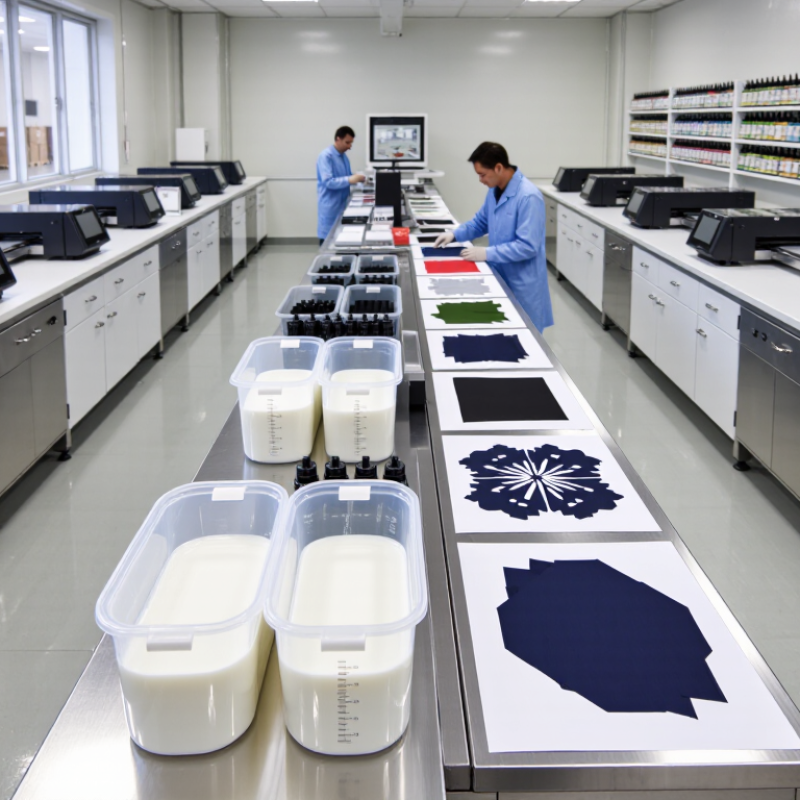
White DTF ink is the opaque white layer printed beneath colored artwork on transfer film. It creates contrast, especially on dark cotton, polyester, and blended fabrics. Without enough opacity, colors may look dull, gray, or uneven after pressing. The ink must also remain flexible after curing and repeated washing. That layer matters.
Supplier choice affects print quality, machine stability, and production costs. In real production trials, I check whiteness, viscosity, drying behavior, and sedimentation. A practical test includes shaking the bottle, printing fine lines, and observing the film after curing. The powder should bond evenly without forming rough, brittle patches. I also inspect whether the supplier provides batch information, storage guidance, technical data, and responsive troubleshooting support. Small details reveal consistency.
China has many white DTF ink suppliers, but buyers should request samples before placing large orders. Compare the same artwork, printer settings, curing temperature, and fabric type. A low price can look attractive. It can also hide higher waste. I have seen ink perform well on one printer but clog another, so compatibility testing remains essential. Some suppliers offer confident promises but limited test records. That weakness matters. Reliable communication, stable batches, and clear quality documentation often matter more than an impressive product description.
Reliable Chinese white DTF ink suppliers should prove performance, not only offer low prices. Grand View Research valued the global digital textile printing market at USD 2.31 billion in 2022. It also projected a 12.1% compound annual growth rate through 2030. This expansion increases supplier choices, but quality differences remain serious. Ask for a recent certificate of analysis, safety data sheet, batch number, and production date. Check viscosity, whiteness, settling, adhesion, and wash durability. A professional supplier should explain testing methods clearly. Vague answers are a warning.
Request samples from two or three production batches. Print fine text, solid white areas, and dark polyester fabric. Observe nozzle stability after several hours, not only after one successful print. Ask whether the ink suits your printhead, curing temperature, powder, and storage conditions. Independent laboratory testing adds confidence, especially for large orders. Factory audits can verify filling equipment, filtration, warehouse temperature, and traceability. However, documents can become outdated. That is an uncomfortable but important lesson.
Tips: Use a written sample checklist. Record ink appearance, sediment, curing temperature, and wash results. Compare the supplier’s results with your own tests. Confirm replacement procedures before payment. A low quotation may hide inconsistent batches, slow technical support, or costly reprints. No supplier is perfect, and your own testing may still miss seasonal changes. Keep retained samples from every shipment for future comparison.
China Top White DTF Ink Suppliers for Global Buyers?
Global DTF buyers should assess measurable quality, not only whiteness or price. Grand View Research valued the global digital textile printing market at approximately USD 4.9 billion in 2023. It also projects a 14.8% compound annual growth rate from 2024 to 2030. This expansion increases pressure on suppliers to provide consistent white ink performance.
Look for ISO 9001-based quality systems, batch traceability, and documented viscosity control. White ink should remain evenly dispersed after storage and resist sediment during continuous printing. Buyers can request test results for wash durability under ISO 105-C06 or AATCC 61 conditions. Rub resistance matters too, especially on dark cotton garments. A practical test uses the same film, powder, printer, and curing temperature across samples.
Ask for SDS documents, ingredient disclosures, and restricted-substance screening aligned with REACH requirements. OEKO-TEX assessments can support safer textile production, but certification should cover the relevant finished product or chemical scope. It does not automatically validate every ink batch. Small details matter.
Supplier experience is visible in failure records, not polished brochures. Request retained samples, shipping stability data, and a clear complaint process. Some suppliers may report excellent laboratory results, yet production behavior can differ. That gap deserves attention. A short pilot run remains wiser than a large first order.
Choosing China’s top white DTF ink suppliers requires more than comparing online ratings. Compatibility testing should begin with your printer model, printhead type, film, powder, and curing temperature. Request a small sample and run it through a complete production cycle. Check nozzle stability, whiteness, drying speed, stretch resistance, and wash performance. White ink settles quickly. Agitate it under normal factory conditions, not only before testing.
Pricing needs a wider view. Compare cost per printed square meter, not only the price per kilogram. Ask for technical data, batch records, shelf life, packaging details, and storage requirements. A low quote may hide higher maintenance, waste, or frequent head cleaning. Confirm whether shipping, testing samples, and replacement policies are included. Numbers can mislead.
Production capacity deserves direct verification. Request monthly output, current lead times, quality-control procedures, and backup plans for raw materials. A factory video helps, but an independent inspection is stronger. During a trial order, compare the delivered batch with the approved sample. I have seen promising samples fail after longer storage. That mistake is expensive. Suppliers should explain deviations clearly, even when the answer is uncomfortable. A clear audit trail builds more trust than polished sales language.
China Top White DTF Ink Suppliers for Global Buyers?
Before ordering white DTF ink, verify more than price and whiteness. Request a recent technical data sheet, safety data sheet, certificate of analysis, and batch number. Check viscosity, surface tension, drying behavior, and recommended printhead compatibility. Ask for a small sample from the actual production batch. A laboratory test is useful, but a real print test is better. Use your printer, film, powder, and curing settings. White ink can settle during storage, causing uneven coverage or blocked nozzles.
Inspect the supplier’s quality process and response time. Reliable suppliers should explain mixing instructions, storage temperatures, shelf life, and handling after opening. Ask how they control batch consistency. Keep written records. I have learned that a confident sales reply does not replace technical evidence. Some specifications may also change between batches, so confirm them before payment. A perfect sample proves little.
Shipping requires practical checks. Confirm sealed bottles, leak-resistant packaging, carton protection, and temperature limits. Request clear commercial invoices, packing lists, product descriptions, and transport documents. Before importing, ask a customs broker to verify the correct tariff classification and local labeling requirements. Do not assume one country’s rules apply everywhere. Check whether the SDS must be translated or submitted in a specific format. Build time for inspection delays. A cheaper shipment can become expensive after repacking, storage, or rejected paperwork. Mistakes happen, especially when details remain verbal.
All products and services provided by Innovative Plastic Molders, Inc. will meet or exceed our customer's perceived requirements and expectations. We will listen and respond to what our customers are telling us in a timely and forthright manner.

ISO 9001:2015 CERTIFIED
© Copyright 2009 – Innovative Plastic Molders, Inc.
Website by Central 8 Marketing
10451 Dog Leg Road Ste 200
Vandalia, OH 45377
Phone: 937.898.3775
Fax: 937.535.0640
Email: sale@endtheplastic.com

