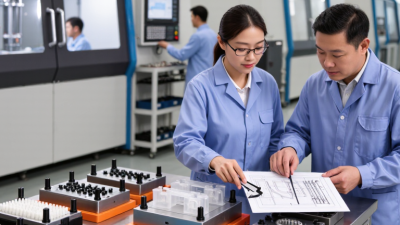

Choosing the right plastic parts manufacturer can determine whether a product succeeds or quietly becomes expensive to maintain. A supplier may offer a low unit price, yet overlook tooling costs, material waste, or inconsistent dimensions. The real decision requires more than comparing quotations. It requires evidence.
Look closely at the manufacturer’s experience with similar plastic parts. Ask for relevant case studies, sample reports, and clear production capabilities. Can the team manage injection molding, tight tolerances, surface finishes, and complex geometries? A capable partner should explain these details in practical language. Vague promises are not enough.
Quality should be visible on the factory floor. Check how incoming resin is inspected, how molds are maintained, and how finished parts are measured. Photos can help, but an audit or video inspection provides stronger evidence. Ask about traceability, corrective actions, packaging, and delivery records. Small details matter. A warped edge may stop assembly. A color variation may damage a product launch.
Communication deserves equal attention. Engineers should respond with drawings, measurements, and realistic timelines. Sales language alone cannot solve technical problems. Review material data sheets and confirm whether the proposed resin suits heat, impact, chemicals, or outdoor exposure. Certifications may support confidence, but they should be verified rather than assumed.
No supplier is perfect. Even experienced manufacturers can miss a tolerance or underestimate a tooling change. The better question is how openly they identify risks and correct mistakes. A reliable partnership grows through testing, documented decisions, and honest feedback. This guide examines the practical checks that help buyers choose with greater confidence.
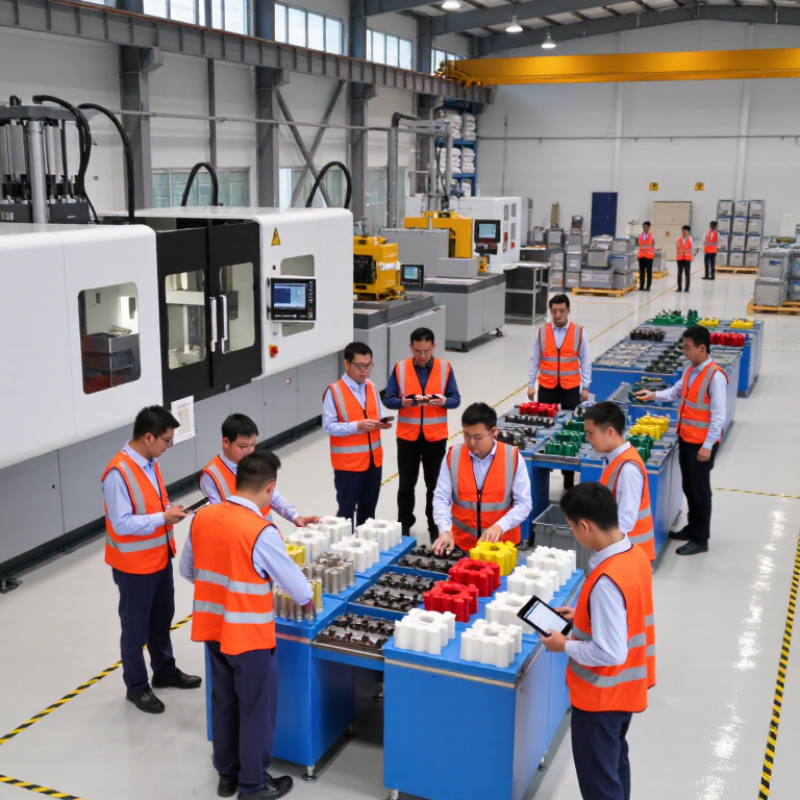
Choosing a plastic parts manufacturer starts with a precise definition of your project goals. Describe the part’s function, dimensions, material, expected lifespan, and operating environment. Include load, temperature, chemical exposure, surface finish, and acceptable tolerances. Small omissions can create expensive tooling changes later.
Set measurable targets for annual volume, prototype quantity, launch date, and unit-cost limits. PlasticsEurope reported global plastics production of 413.8 million tonnes in 2023, showing the scale and competitiveness of this industry. Your manufacturer should explain which process fits your volume, such as injection molding, CNC machining, or additive manufacturing. Ask for evidence of process capability, inspection methods, and previous experience with similar geometries. A strong supplier discusses risks before quoting.
Sustainability also needs a clear definition. The OECD’s Global Plastics Outlook projects plastic waste could rise from 353 million tonnes in 2019 to 1,014 million tonnes by 2060. Therefore, specify recycled content, repairability, material separation, or end-of-life requirements where practical. Do not assume “recyclable” means automatically sustainable. Review the actual resin, additives, colorants, and local recovery options. The first specification is often imperfect. That is acceptable. Record uncertain assumptions, test critical features, and revise the brief before approving production tooling.
Choosing a manufacturer starts with matching the process to the part’s geometry, volume, and material. Injection molding suits repeatable parts with tight tolerances and complex features. Extrusion works better for continuous profiles, tubes, and sheets. Blow molding fits hollow containers, while CNC machining supports prototypes and low-volume components.
Material compatibility requires more than checking a resin datasheet. Compare melt temperature, mold temperature, shrinkage, moisture sensitivity, chemical exposure, and expected load. A resin may tolerate heat but fail after repeated contact with cleaning chemicals. Filled polymers can improve stiffness, yet they may increase tool wear and create visible flow marks. PlasticsEurope reported global plastics production at 413.8 million tonnes in 2023, showing the scale of material selection across industries. The wrong choice still happens, especially when teams focus only on price.
Tips: Ask the manufacturer for a material compatibility matrix and recent test records. Request samples with real wall thicknesses, ribs, and fastening points. Check whether the proposed process controls drying, melt temperature, pressure, and cooling. The ISO 11469 standard can support consistent plastic identification, but it cannot replace application testing. Review dimensional results after conditioning, not only straight from the mold. A perfect material chart does not exist. Sometimes, the first design needs reconsideration.
A capable plastic parts manufacturer should show evidence, not polished promises. Ask for machine specifications, material-processing limits, tolerance records, and recent inspection reports. The details matter: a 250-ton press cannot replace a 500-ton machine when a large housing needs controlled filling. Request sample parts with measured dimensions, surface-finish data, and documented corrective actions.
ISO’s Survey 2022 recorded more than 1.2 million ISO 9001 certificates worldwide. Certification helps, but it does not prove molding expertise. Check whether the quality system covers tooling changes, resin traceability, first-article inspection, and process validation. Ask who approves mold-flow studies and how operators respond when cavity pressure drifts.
Experience should match your part, not merely your industry. Review similar projects involving wall thickness, inserts, tight fits, or engineered polymers. The 2024 Wohlers Report valued the global additive manufacturing industry at about 20 billion dollars in 2023, showing how quickly prototyping methods are expanding. Still, a printed sample may hide problems found in production molding. I have seen attractive prototypes fail during cooling. That risk deserves an honest conversation. Visit the factory if possible, observe measurement equipment, and compare its stated capacity with actual production records.
Typical dimensional tolerance ranges vary by plastic manufacturing process. Use these figures as an initial screening reference, then verify the manufacturer’s actual capability through drawings, inspection reports, sample parts, process capability data, and relevant quality certifications.
Choosing a plastic parts manufacturer requires more than comparing the lowest quotation. Quality systems deserve close inspection. ISO’s 2022 Survey recorded 1,265,216 valid ISO 9001 certificates worldwide, but certification alone does not guarantee consistent parts. Ask for recent inspection reports, material traceability, process-control plans, and corrective-action records. Request a sample part and inspect flash, warpage, surface finish, and critical dimensions. Ask for evidence.
Pricing should show the complete cost, not only the unit price. Compare tooling, resin, sampling, packaging, freight, payment terms, and future design changes. A cheaper mold may require more maintenance or produce unstable parts. That mistake can become expensive. I would also compare quotes using the same annual volume and tolerance requirements. Otherwise, the numbers are misleading.
Lead time should be separated into design review, tooling, first-article approval, production, and shipping. The 2023 State of Manufacturing report from Fictiv reported that 92% of manufacturers experienced supply-chain disruptions, making realistic buffers essential. Ask how suppliers handle material shortages, machine downtime, and rejected samples. Support matters after the purchase order. Evaluate engineering response times, escalation procedures, documentation quality, and communication across time zones. A practical trial project can reveal more than a polished presentation. Even a careful scorecard can miss cultural friction or slow decisions, so keep reviewing the relationship after production begins.
How to Choose the Right Plastic Parts Manufacturer?
A good plastic parts manufacturer should prove capability through samples, clear communication, and dependable long-term support. In my experience, one molded sample rarely tells the whole story. Check dimensions with calipers, inspect edges for flash, and test the part during actual assembly. Look for sink marks, uneven texture, warping, and weak snap-fit features. Ask whether the sample used production-grade resin and the intended molding process. A polished prototype can sometimes hide production risks.
Tips: Request three to five samples from the same tool. Compare their weight, surface finish, and critical measurements. Ask for a dimensional inspection report. Also, discuss how rejected parts are handled. These details reveal process discipline.
Communication becomes more important when design changes begin. A reliable supplier should explain draft angles, wall thickness, cooling concerns, and expected tolerances in practical language. Ask who will manage engineering questions and how quickly they usually respond. Keep revision numbers, approved drawings, and meeting notes in one shared record. Silence creates expensive confusion. I have seen promising projects slow down because small changes were discussed but never documented.
Long-term partnership potential depends on more than a low unit price. Review quality controls, production capacity, material traceability, and maintenance plans. Ask how the manufacturer handles urgent adjustments or future volume increases. Confirm responsibilities for tooling, inspections, packaging, and delivery updates. Be honest about forecast uncertainty. Not every decision will be perfect, and early assumptions may need revision. A dependable partner accepts that reality and helps improve the process.
| Evaluation Area | Assessment Criterion | Evidence to Review | Recommended Benchmark | Weight | Why It Matters |
|---|---|---|---|---|---|
| Sample Quality | Dimensional accuracy | Inspection report comparing critical dimensions with the approved drawing and tolerance requirements | All critical dimensions within specified tolerance | 15% | Confirms whether the manufacturer can consistently translate technical drawings into usable parts. |
| Sample Quality | Surface finish and appearance | Visual inspection under consistent lighting; review of gloss, texture, weld lines, sink marks, flash, and discoloration | No unacceptable cosmetic defects in customer-facing areas | 10% | Surface defects can affect product appearance, assembly, customer acceptance, and additional finishing costs. |
| Sample Quality | Material verification | Material certificate, resin grade, color reference, and basic identification testing where required | Material matches the approved specification and intended operating conditions | 10% | Correct material selection influences strength, heat resistance, chemical resistance, durability, and regulatory compliance. |
| Sample Quality | Functional and fit testing | Assembly trial, mating-part check, load test, leak test, or other application-specific validation | Parts assemble smoothly and meet defined functional requirements | 10% | A visually acceptable sample may still fail during assembly or actual use. |
| Communication | Technical response quality | Clarity of replies regarding tolerances, draft angles, wall thickness, tooling, material, and manufacturability | Specific answers supported by drawings, marked-up files, or documented assumptions | 10% | Accurate technical communication reduces design changes, misunderstandings, and production delays. |
| Communication | Response speed and ownership | Time required to answer questions, resolve issues, and identify the responsible project contact | Agreed response times are met consistently during development | 8% | Fast, accountable communication is especially important when schedules or specifications change. |
| Communication | Change management | Documented process for engineering changes, sample revisions, drawing control, and approval records | Every revision is traceable with version numbers and approval status | 7% | Revision control prevents outdated drawings or unapproved changes from entering production. |
| Long-Term Potential | Process capability and quality control | Inspection plan, in-process controls, final inspection records, calibration practices, and corrective-action process | Controls are documented and linked to critical product characteristics | 10% | Reliable processes are more important than a single successful prototype when volume increases. |
| Long-Term Potential | Capacity and scalability | Available molding machines, tooling capacity, production schedule, subcontracting controls, and forecast response process | Capacity can support expected demand with a defined expansion or backup plan | 8% | A supplier should be able to support both initial production and future volume growth. |
| Long-Term Potential | Cost transparency and total cost | Separate quotation for tooling, part price, secondary operations, packaging, inspection, freight, and recurring charges | Pricing assumptions and future cost drivers are clearly documented | 5% | The lowest unit price may not be the lowest total cost after tooling, defects, logistics, and rework are included. |
| Long-Term Potential | Supply continuity and risk control | Backup material sources, preventive maintenance, business continuity plan, safety-stock options, and lead-time history | Key supply risks are identified with practical mitigation actions | 4% | Risk planning helps protect production from material shortages, equipment issues, and unexpected interruptions. |
| Long-Term Potential | Commercial and compliance readiness | Quality agreement, confidentiality terms, regulatory documentation, traceability records, and payment conditions | Required documents are available before production approval | 3% | Clear commercial and compliance requirements reduce legal, quality, and traceability exposure. |
| Suggested decision rule | 100% | Advance candidates that meet all critical sample requirements, communicate clearly, and achieve a documented weighted score of at least 80%. | |||
All products and services provided by Innovative Plastic Molders, Inc. will meet or exceed our customer's perceived requirements and expectations. We will listen and respond to what our customers are telling us in a timely and forthright manner.

ISO 9001:2015 CERTIFIED
© Copyright 2009 – Innovative Plastic Molders, Inc.
Website by Central 8 Marketing
10451 Dog Leg Road Ste 200
Vandalia, OH 45377
Phone: 937.898.3775
Fax: 937.535.0640
Email: sale@endtheplastic.com